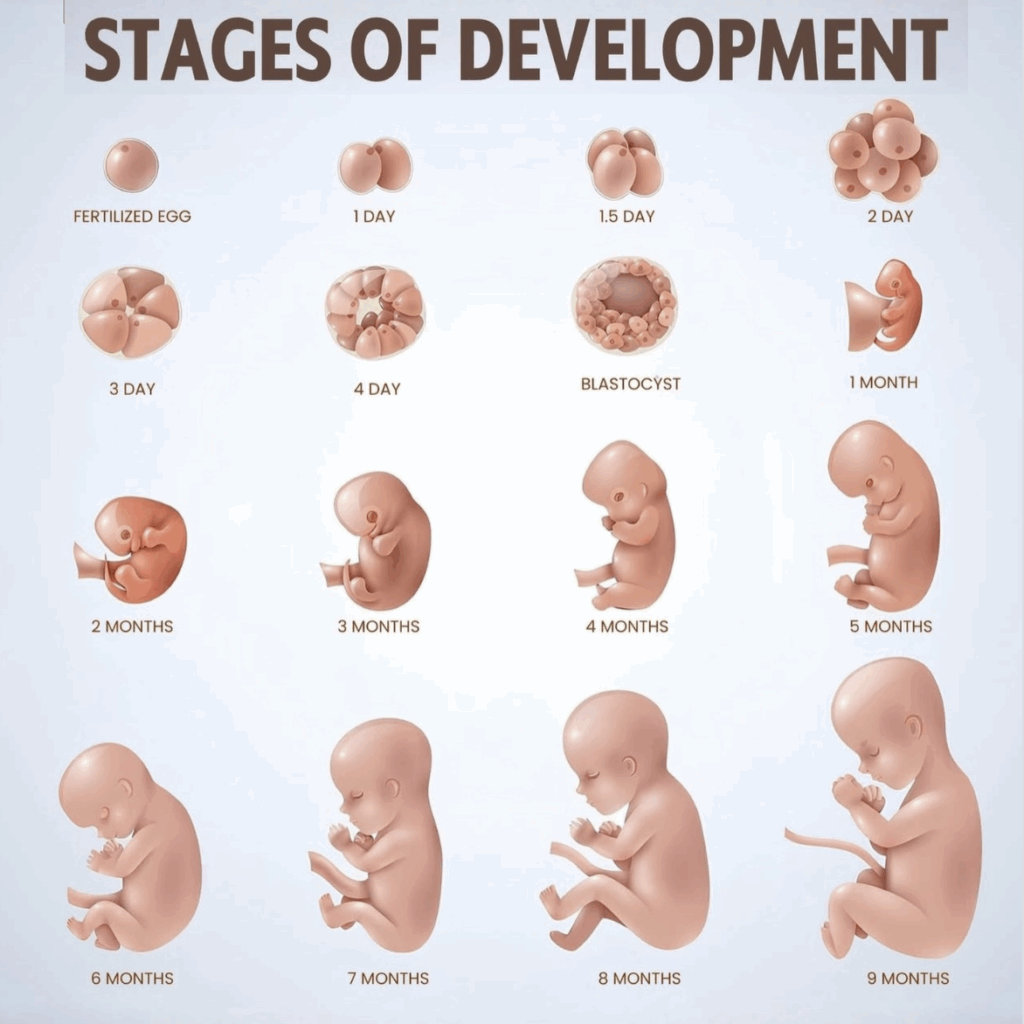
Pregnancy is an incredible journey, and understanding week-by-week fetal development can make the experience even more meaningful. Whether you’re a first-time mom or growing your family, it’s exciting to know how your baby is changing and developing at every stage.
At Pumps for Mom, we support moms from bump to baby and beyond. This guide walks you through each trimester so you can follow your baby’s growth, understand key milestones, and feel more confident as your body changes.
First Trimester: Weeks 1–13
Weeks 1–4: Conception & Implantation
- Pregnancy dates usually begin with the first day of your last menstrual period.
- Fertilization typically happens around week 2–3, when the sperm and egg join to form a zygote.
- The zygote travels down the fallopian tube, divides into many cells, and becomes a blastocyst.
- By the end of week 4, the blastocyst has implanted into the uterine lining, where it will grow for the rest of pregnancy.
Week 5: The Embryo Forms
- Your baby is now called an embryo and is about the size of a sesame seed.
- The neural tube, which will become the brain and spinal cord, begins to form.
- The basic structures of the heart and circulatory system start developing.
Weeks 6–7: Heartbeat & Early Features
- Your baby’s heart is beating and can sometimes be detected on ultrasound around this time.
- Small bumps appear where arms and legs will grow.
- Facial features begin to form, including tiny pits that will become ears and dark spots where eyes will develop.
Weeks 8–9: Major Organs Developing
- All major organs and body systems are beginning to take shape, including the lungs, liver, and kidneys.
- Fingers and toes start forming, although they may still be webbed.
- The embryo is starting to look more human and is roughly the size of a grape.
Weeks 10–13: From Embryo to Fetus
- By week 10, your baby is officially called a fetus.
- Tooth buds, nails, and hair follicles begin to form.
- Baby can bend arms and legs, and tiny movements may start — though you usually can’t feel them yet.
- By the end of the first trimester, your baby is about 3 inches long and many organs are formed but still maturing.
Second Trimester: Weeks 14–27
The second trimester is often called the “golden period” of pregnancy. Many moms feel more energy, nausea may improve, and your baby is growing fast.
Weeks 14–16: Growing Quickly
- Baby’s neck is more defined and the head is more upright.
- Facial muscles are developing, so your baby may begin making expressions.
- Lanugo, a fine layer of hair, begins to cover the body for warmth.
- At around 16 weeks, the baby is about the size of an avocado.
Weeks 17–20: Feeling Those First Kicks
- Baby’s skeleton is changing from soft cartilage to bone.
- You may start to feel fluttering movements known as “quickening.”
- By week 20, the anatomy ultrasound can often reveal baby’s sex, if you choose to know.
- Baby can hear sounds and may respond to your voice or loud noises.
Weeks 21–24: Sensory Development
- Baby’s taste buds are developing and swallowing amniotic fluid helps practice digestion.
- The lungs are forming tiny air sacs, preparing for breathing after birth.
- Eyebrows, eyelashes, and more defined facial features appear.
- By 24 weeks, baby is around the size of an ear of corn and continues to gain weight.
Weeks 25–27: Building Strength
- Baby’s nervous system is maturing, allowing more coordinated movements.
- Hearing is more developed; your baby may recognize familiar voices.
- Fat begins to build under the skin, smoothing out the earlier “wrinkled” appearance.
- By the end of the second trimester, baby may be 14 inches long or more.
Third Trimester: Weeks 28–40
During the third trimester, your baby focuses on growing, gaining weight, and preparing for life outside the womb.
Weeks 28–31: Brain & Lung Development
- Baby’s brain is rapidly developing, forming grooves and folds.
- Sleep cycles begin, and your baby may have periods of active kicking followed by rest.
- Lungs keep maturing, practicing rhythmic breathing movements with amniotic fluid.
- Eyes can open and close, and baby may respond to light shining on your belly.
Weeks 32–35: Positioning for Birth
- Baby continues to gain weight and your belly growth often speeds up.
- Many babies move into a head-down position in preparation for birth.
- Bones are fully formed but still soft and flexible, especially the skull.
- Vernix, a creamy protective coating, covers the skin to protect it from the amniotic fluid.
Weeks 36–40: Final Preparations
- At 37 weeks, your baby is considered “early term,” and at 39–40 weeks, “full term.”
- Lungs, brain, and liver continue important final development, even in the last weeks.
- Your baby is practicing sucking, swallowing, and breathing motions.
- Baby descends lower into your pelvis (lightening), and you may notice more pressure or frequent bathroom trips.
Every pregnancy is unique. Some babies arrive a little earlier, and some take their time — your healthcare provider will help you track growth and development at each prenatal visit.
How Pumps for Mom Supports You During Every Week
As your baby grows, your body is working hard to prepare for breastfeeding. Having the right breast pump can make a big difference once your baby arrives, especially if you plan to return to work, exclusively pump, or simply want more flexibility.
- Insurance-covered breast pumps: Pumps for Mom works with major health insurance plans to help you receive a breast pump at little or no cost.
- Trusted brands: We offer leading pumps from brands like Elvie, Medela, Spectra, Zomee, and more.
- Supportive team: Our specialists help you compare pumps based on your lifestyle, preferences, and coverage.
Many moms start the process of getting a pump in the second or third trimester so everything is ready to go when baby arrives.
Check your eligibility for an insurance-covered breast pump with Pumps for Mom and feel more prepared for life with your newborn.
Week-by-Week Pregnancy Tips for Mom
- First trimester: Focus on prenatal vitamins (especially folic acid), hydration, and rest. Schedule your first prenatal appointments and discuss any medical concerns with your provider.
- Second trimester: Enjoy increased energy, start planning your registry, and talk with your provider about childbirth classes and breastfeeding resources.
- Third trimester: Finalize your birth plan, pack your hospital bag, select a pediatrician, and explore which breast pump will best support your feeding goals.
Remember, online information is helpful, but it does not replace professional medical advice. Always talk with your healthcare provider about any concerns, symptoms, or questions regarding your pregnancy and baby’s development.
When to Call Your Healthcare Provider
Every pregnancy is different, but you should contact your provider or seek urgent care if you experience:
- Severe abdominal pain or cramping
- Heavy bleeding or passing clots
- Sudden swelling of face, hands, or feet
- Severe headaches, vision changes, or dizziness
- Decreased fetal movement once you have been feeling regular kicks
Your care team is there to support you through every stage, so never hesitate to reach out.
Supporting You from Pregnancy to Postpartum
Watching your baby grow from a tiny cluster of cells to a full-term infant is truly amazing. Understanding week-by-week fetal development can help you feel more connected to your baby and more prepared for birth.
When you are ready to plan for breastfeeding, Pumps for Mom is here to help you find the right breast pump through your insurance and support you in your feeding journey.
Get started with Pumps for Mom today and feel confident every step of the way — from pregnancy to postpartum.